Southern-hemisphere trufficulture (especially in Western Australia and parts of New Zealand) has matured from small experiments in the 1980s–1990s into a credible commercial industry over ~25–30 years. That success depended on deliberate soil modification (pH and structure), irrigation, better certified mycorrhized seedlings, and attention to population genetics (mating-type) of the fungus.
Which truffle species are cultivated in Australia & New Zealand
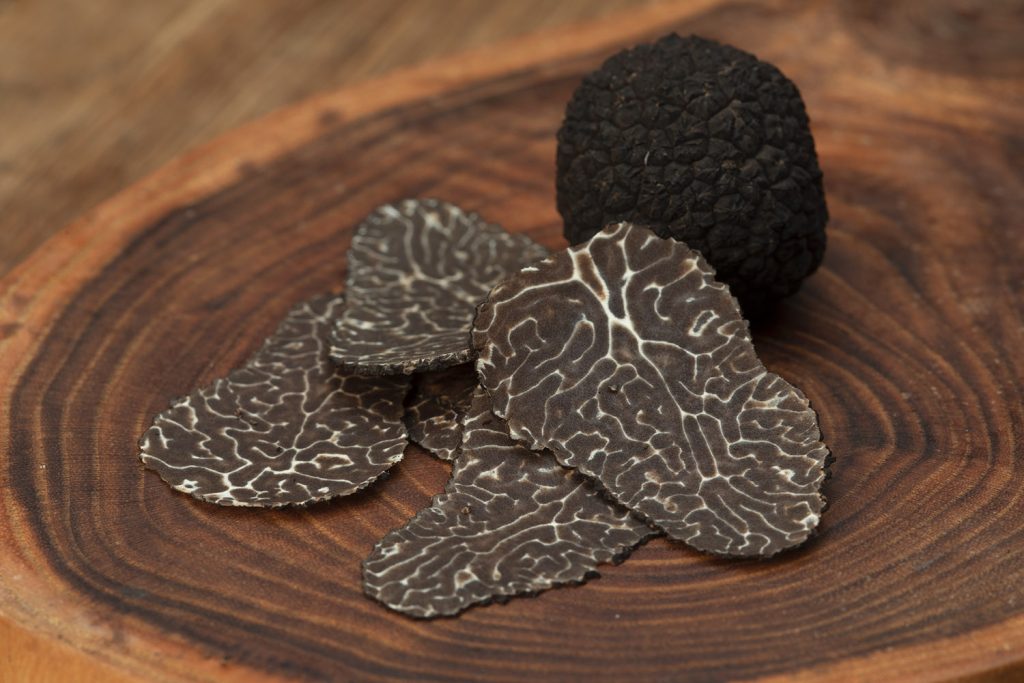
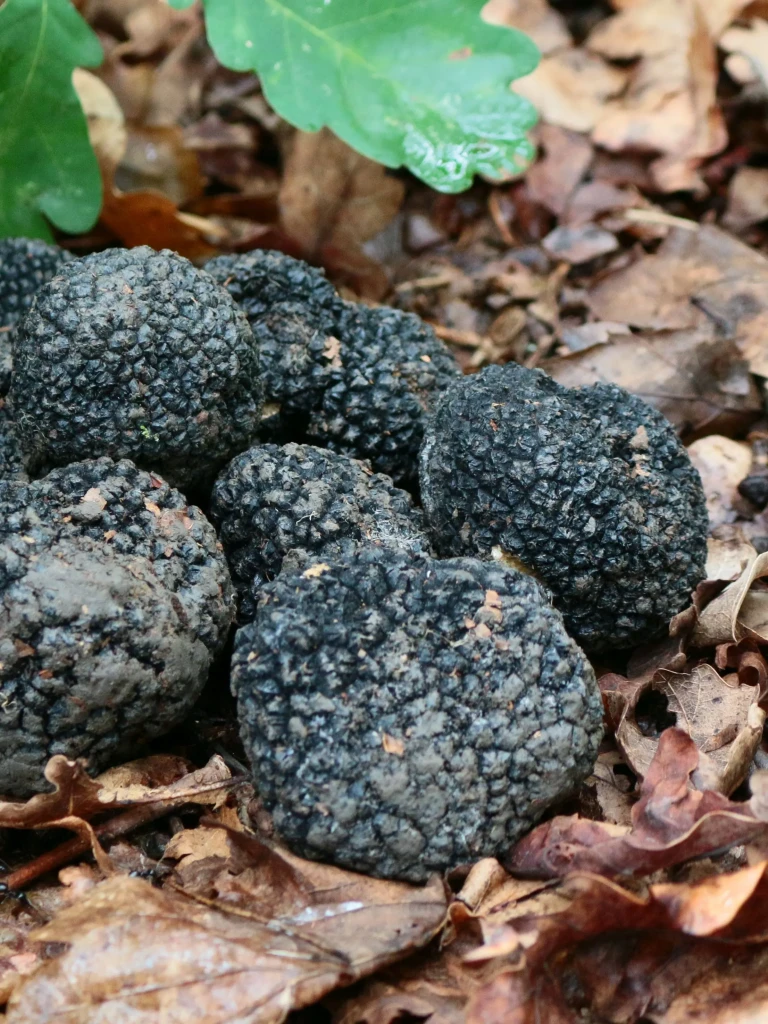
Tuber melanosporum (Périgord / black winter truffle) — by far the dominant commercial target in both countries. Australia is now one of the world’s leading producers of T. melanosporum outside Europe.
Tuber aestivum / T. uncinatum (summer/burgundy types) and Tuber borchii appear in experimental plantings and small commercial trials, but occupy much smaller area than T. melanosporum. Some nurseries and researchers experiment with other edible Tuber spp. as well.
How plantation area / production has changed in recent decades
History & expansion: Research and pilot plantings began in New Zealand in the mid-1980s and in Australia in the 1990s. Commercial harvests in Australia started in the late 1990s/early 2000s; exports began a few years later. Australia has grown to become (recently) the world’s fourth largest producer of Périgord black truffles (after Spain, France and Italy).
Scale & trend (last ~10–15 years): From a handful of truffières in the 1990s to hundreds of plantings across temperate / Mediterranean-type regions (notably Western Australia, Tasmania, Victoria, NSW). Industry documents and government/agriculture summaries report continuing growth of planted area and production year-to-year, with exports measured in tonnes (Australia exported >11 t in 2023). Growth was driven especially after the adoption of more rigorous tree-certification and nursery standards (post-2010s).
Important note on variability: production is highly variable year to year and site to site (climate, genetics, nursery quality and management cause wide differences). Some regions and farms have become reliably productive, others remain experimental.
What soil & technological changes were required to make local soils suitable for T. melanosporum
Southern-hemisphere soils often need several deliberate modifications to emulate the conditions in the truffle’s native European sites. The main interventions used across Australian and New Zealand plantings:
pH modification (liming / carbonate addition):
T. melanosporum performs best in neutral–alkaline soils (optimally ~pH 7.5–8.3). Many local soils are naturally acidic (or only weakly calcareous), so growers routinely add lime or calcium carbonate materials and incorporate them into the root zone prior to planting (and sometimes maintain pH with follow-up applications). Several Australian theses and industry guides emphasise pH correction as a key prerequisite.Improve drainage / soil structure (porosity, coarse fraction):
Natural T. melanosporum sites are often well-draining, rocky or gravelly. Where soils are heavier or prone to waterlogging, plantings use mechanical amendments (sand/gravel additions or engineered planting beds), careful site selection, or raised beds to reduce waterlogging risk. Good drainage prevents root rot and creates favorable aeration for truffle mycelium.Irrigation & water management:
Many truffières installed controlled irrigation (drip systems) to maintain optimal moisture profiles (seasonal patterning helps initiation and ascocarp growth). Australia’s Mediterranean climate (hot dry summers, cool wet winters in places like Manjimup) makes irrigation an important management tool.Nutrient management — keep phosphorus low/moderate, controlled nitrogen:
Excessive phosphorus is associated with weaker mycorrhization / reduced truffle production. Growers therefore avoid heavy P fertilization and use targeted, conservative nutrient regimes tailored to the truffle/host system.High-quality mycorrhized seedlings & nursery certification:
A major historical bottleneck was inconsistent or contaminated nursery stock (some seedling lots were poorly colonized or contaminated with other Tuber species). Australia’s industry responded with best-practice protocols and certification for mycorrhized seedlings; quality of inoculum and correct colonization of seedlings is now recognised as a critical success factor.Genetic & population considerations (mating-type balance):
The biology of T. melanosporum requires compatible mating types (MAT1-1 & MAT1-2) for sexual reproduction. Research in Australia has shown skewed mating-type distributions and limited genetic diversity in some plantings; addressing that (choice of inoculum strains, mixed inoculations, and monitoring mating types) became part of research and practice.Potting mixes & modern mycorrhization methods:
Newer research explores controlled potting-mix formulations (including compost-based mixes) to produce reliable, well(mycorrhized) host plants before planting — this reduces field-establishment problems.
Yields and production performance (what numbers are realistic?)
Time to first production: many plantings begin to produce after 5–10 years; commonly 7–12 years is quoted before consistent harvests appear. Some exceptional sites produce earlier, while others may take longer or fail to establish.
Typical yields: highly variable. Published and industry figures report ranges from ~100 kg/ha/year in newer or conservative sites up to 200–300+ kg/ha/year on well-managed, mature truffières; exceptional pockets may exceed those values in good years. Industry summaries place national production in Australia in the tonnes per year (for example, government/industry notes show Australia exported >11 tonnes in 2023). Use these figures cautiously — they are strongly site- and year-dependent.
Key drivers of yield variability: inoculum quality and genetic diversity, mating-type balance, soil pH and structure, irrigation and seasonal weather patterns (cold winter chill, spring/summer moisture), and long-term orchard husbandry.
Important scientific works and researchers (selected, with representative publications)
Below are cornerstone papers, reviews and contributors that you should read for a scientific view of truffle cultivation in Australia & New Zealand.
Core research papers & reviews
Linde, C. C., et al. (2012). “Genetic diversity and mating type distribution of Tuber melanosporum and their significance to truffle cultivation in artificially planted truffières in Australia.” — a key genetic study comparing Australian populations with European sources; demonstrates mating-type skew and genetic drift issues in plantings.
Murat, C., et al. (2013). “Fine-scale spatial genetic structure of the black truffle (Tuber melanosporum)” — important work on mating-type spatial structure and implications for cultivation and fruiting biology.
García-Montero, L. G., et al. (2006). “Soil factors that influence the fruiting of Tuber melanosporum” — classic quantitative analysis linking soil properties (texture, pH, carbonates, organic matter) to fruiting. Useful for practical soil evaluation and amendments.
Industry overviews & strategic documents:
Australian Truffle Industry Association (ATIA) — Strategic Plan 2021–2026 (industry guidance on certification, nursery standards, R&D priorities). This document summarises what the industry learned about nursery certification and scale-up.
Agrifutures Australia — Truffle sector summary (government page summarizing production and export data, industry size).
New Zealand historical & technical accounts:
Hall, I. & Wang, Y. — multiple New Zealand contributions summarizing early trials, nursery protocols and the practical evolution of truffle culture in NZ (see chapter/technical reports collated by NZ growers and research groups).
Theses & technical studies (practical detail)
Bradshaw, B. P. (2005). PhD thesis on physiological aspects of hazel associated with black truffle in WA — contains practical experimental detail on host physiology, soil interactions and management recommendations. Useful reading for on-farm management decisions.
Researchers / groups to follow
C. C. Linde — genetics and mating-type studies (Australia).
Ian Hall & Yun Wang — New Zealand field research and extension.
Agrifutures / ATIA / regional research groups (WA, Vic, Tas) — industry-driven applied research and grower guidance.